


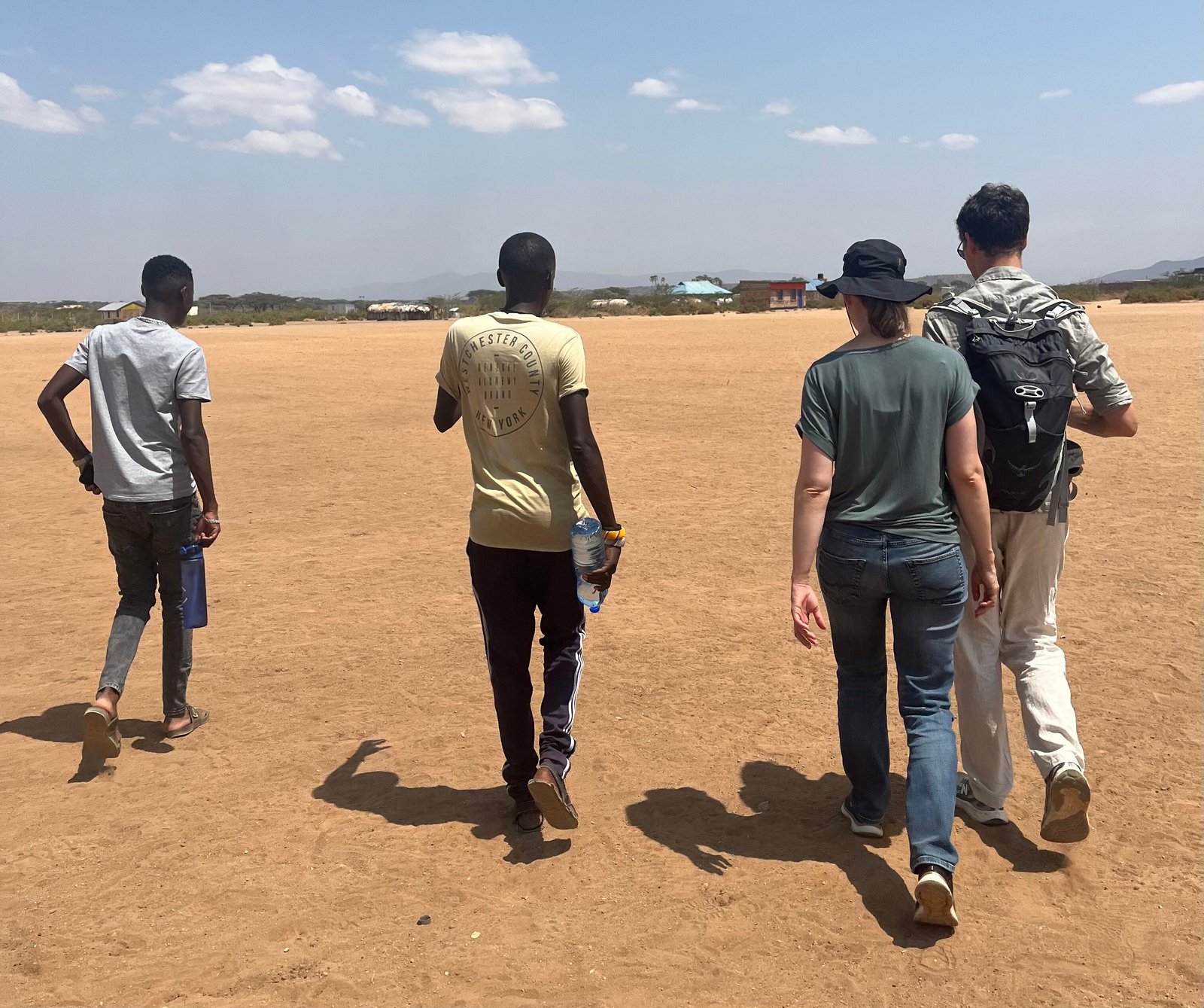
Kenya is home to more than 40 different ethnic communities, each with its own traditions, stories and way of life. And while we love discovering Kenya’s landscapes and wildlife, for us, understanding the people who call these places home is just as important.
That is why a cultural day with our good friend Angelo is always something very special.
After a five-hour drive north from Nairobi, we meet Angelo in the Samburu region – the place where he was born and raised and which has shaped who he is today.
What makes conversations with Angelo so fascinating is that he lives between two worlds. He grew up deeply connected to traditional Samburu culture, its rituals, responsibilities and community structures, while at the same time receiving a modern education and becoming part of today’s more westernized Kenyan lifestyle.
And this raises so many interesting questions: How do you combine these two worlds? Which traditions do you want to preserve? Which ones do you question? And how does a culture change without losing its identity?
An Evening Around the Bonfire
One of our favourite ways to spend time with Angelo is simply sitting around the bonfire at Lions Cave Hotel and talking.
And when we say talking, we don’t mean listening to a rehearsed presentation about Samburu culture. We mean real conversations.
Angelo is someone we can ask the deeper questions – about traditions, rituals, relationships, marriage, family structures, the role of elders, expectations within the community and the sometimes complicated relationship between tradition and modern life.
We especially love discussing the roles of women and men within Samburu society. What is traditionally expected from a woman? What responsibilities does a man carry? How are these roles changing today? And perhaps most interestingly: What does Angelo himself think about them?
He doesn’t simply explain what is done. He helps us understand why traditions exist, where they come from and how they are experienced by someone who is part of this culture himself.
Growing Up Samburu
Traditional Samburu life is strongly connected to family, community and livestock. Many families live in manyattas, and elders traditionally have an important role in decision-making and passing knowledge from one generation to the next.
Age and gender have historically shaped responsibilities within the community. Colourful clothing and intricate beadwork are not simply beautiful decorations either – they can communicate identity, age, status and social roles.
Through Angelo, these traditions become much more than something we observe from the outside. They become personal stories about childhood, family, expectations and change.
Morans, Rituals and Becoming a Man
Another fascinating topic is the life of the morans – the Samburu warriors.
Traditionally, young men move through different age-sets, and becoming a moran is an important stage of life connected with courage, responsibility, livestock and protection of the community.
Angelo can take us much deeper into what this actually means: the rituals surrounding different stages of life, the behaviours expected from young men, the influence of elders and what happens when these traditional expectations meet school, employment, cities, technology and modern relationships.
Celebrations and ceremonies such as Lmuget, marking transitions between age-sets, are another opportunity to understand how deeply community, identity and tradition are connected.
Love, Marriage and the Roles of Women and Men
Some of our most interesting discussions with Angelo are about relationships and marriage.
Traditional Samburu weddings involve much more than two individuals. Families, elders, livestock, ceremonies and community relationships all play a role.
But what happens when younger generations have different ideas about love and marriage? How much influence should families have? What happens when traditional gender roles no longer fit the life someone wants to live?
These are exactly the conversations we enjoy having with Angelo. There isn’t always a simple answer – and that is what makes them so valuable. It is not about judging a culture from the outside, but about listening, questioning, discussing and trying to understand different perspectives.
A Culture That Is Living and Changing
Samburu culture isn’t something frozen in the past.
Livestock – including cattle, goats, sheep and camels – continues to be an important part of life for many families. At the same time, people work in tourism, employment, trade, farming and businesses, while education and technology are creating new opportunities.
Angelo himself represents some of these changes. He is Samburu, proud of where he comes from, while also navigating a modern Kenyan world. Rather than presenting these as two completely separate lifestyles, he gives us an insight into what it means to find your own place somewhere between them.
And this is exactly why we love spending time with him.
Experiencing Samburu Differently
For us, travelling to Samburu should never only be about spotting elephants, lions or leopards.
It is also about meeting people, listening to their stories and understanding the place through their eyes.
A cultural day with Angelo isn’t a staged village visit or a quick photo opportunity. It is about sitting together, asking questions – including difficult ones – laughing, discussing, sometimes disagreeing and learning from each other.
Because the most memorable cultural encounters happen when we are curious enough to go beyond “What do you do?” and start asking “Why?”, “How do you feel about it?” and “What is changing?”
And with Angelo, those questions can lead to some very long and fascinating evenings around the fire.